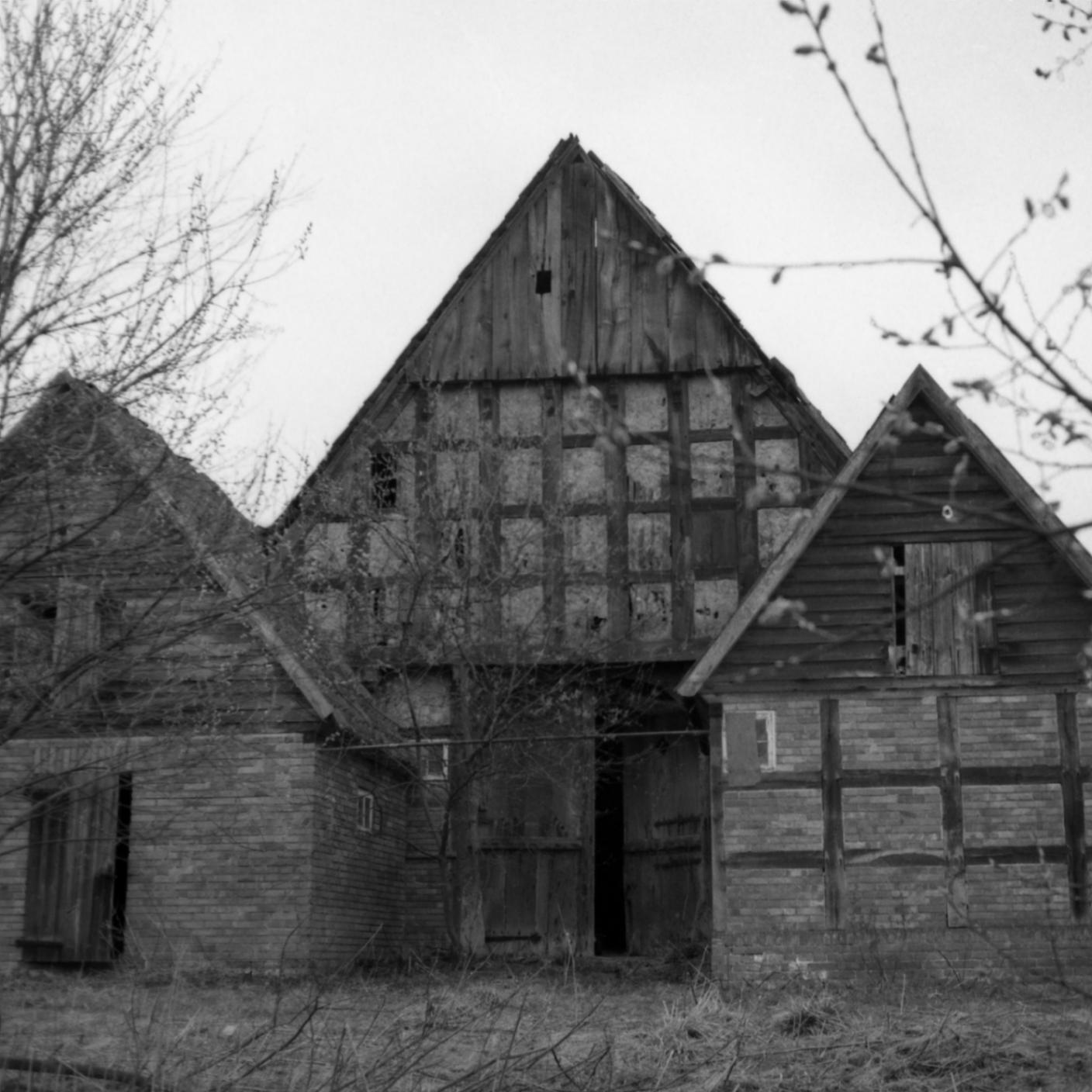
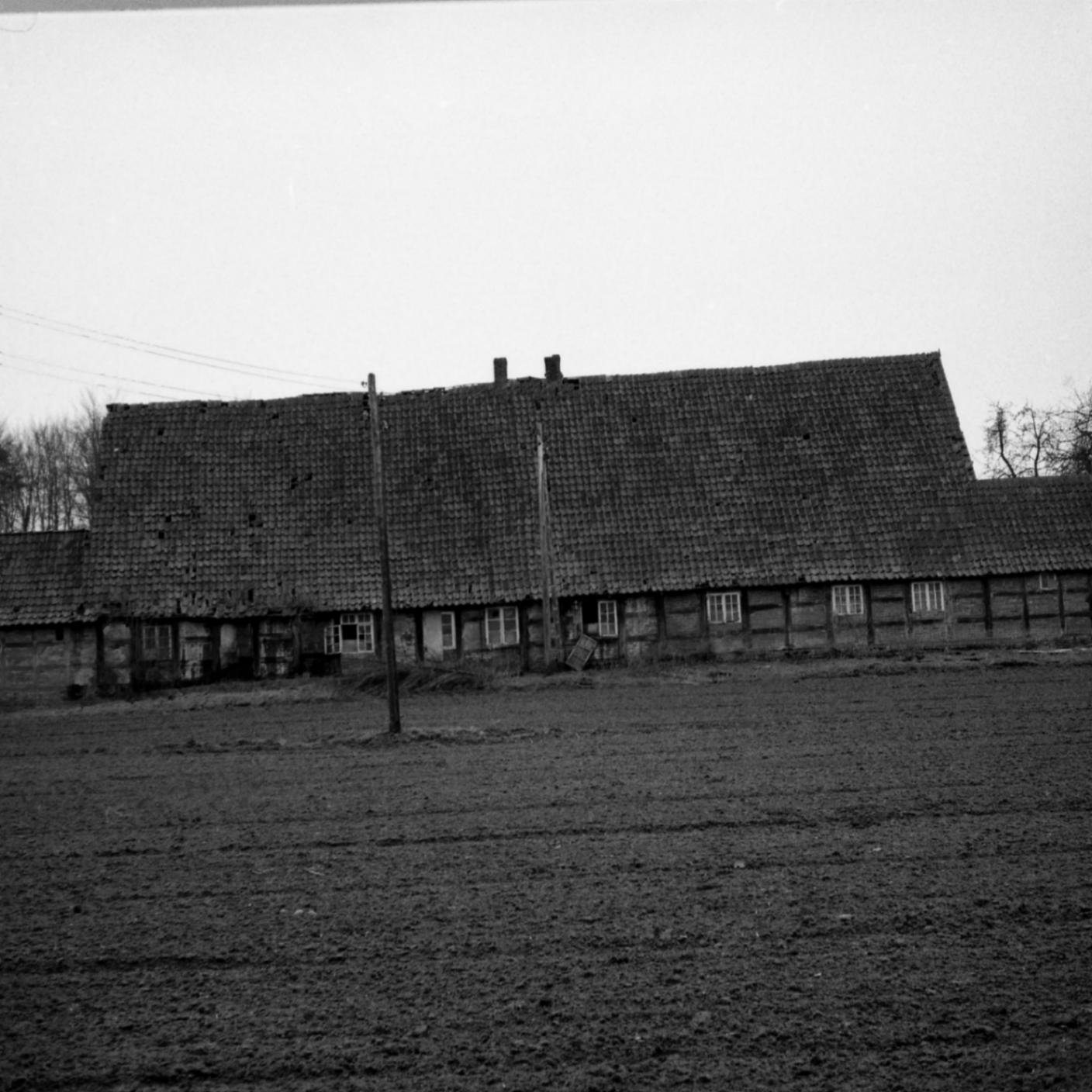
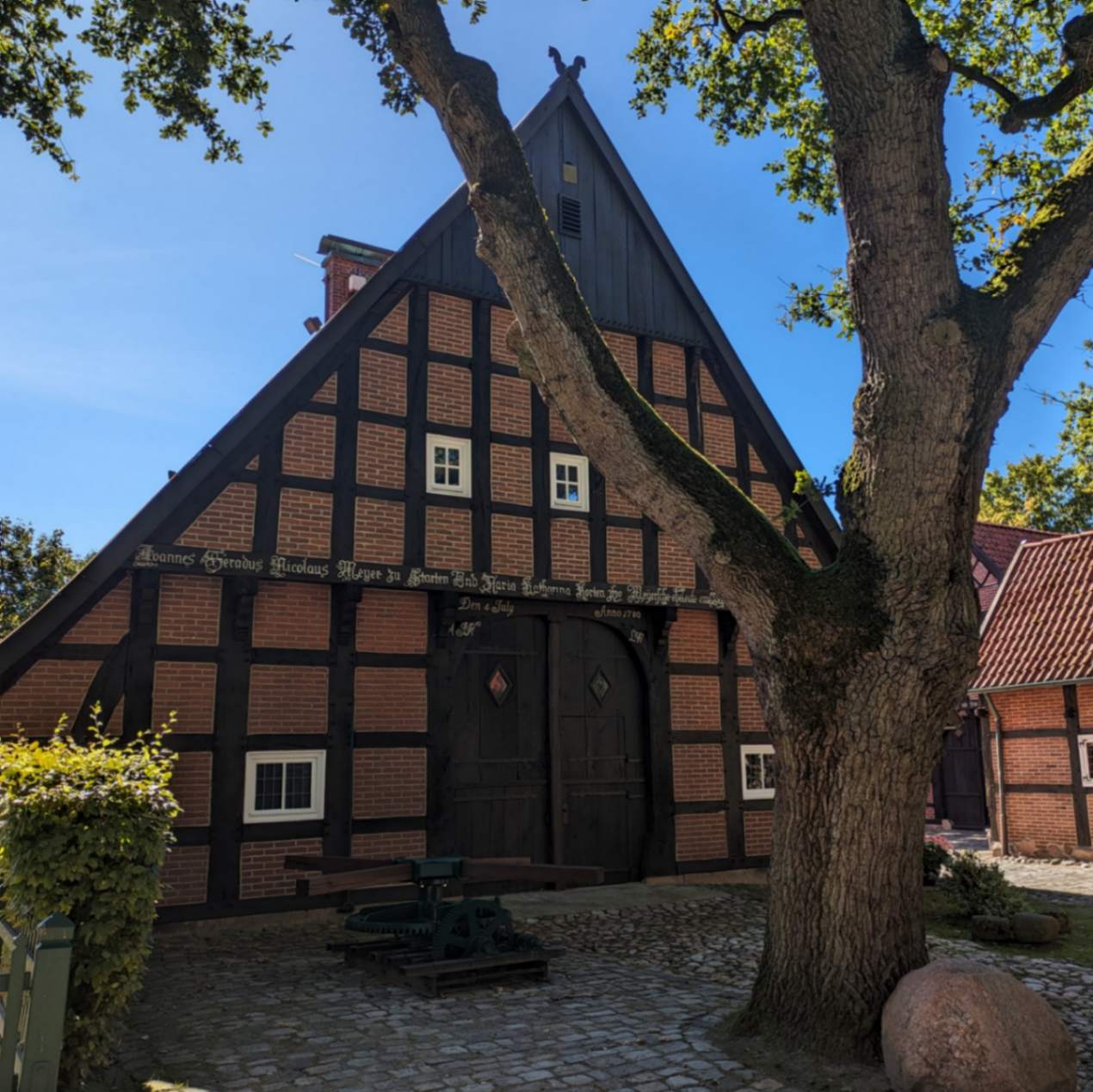
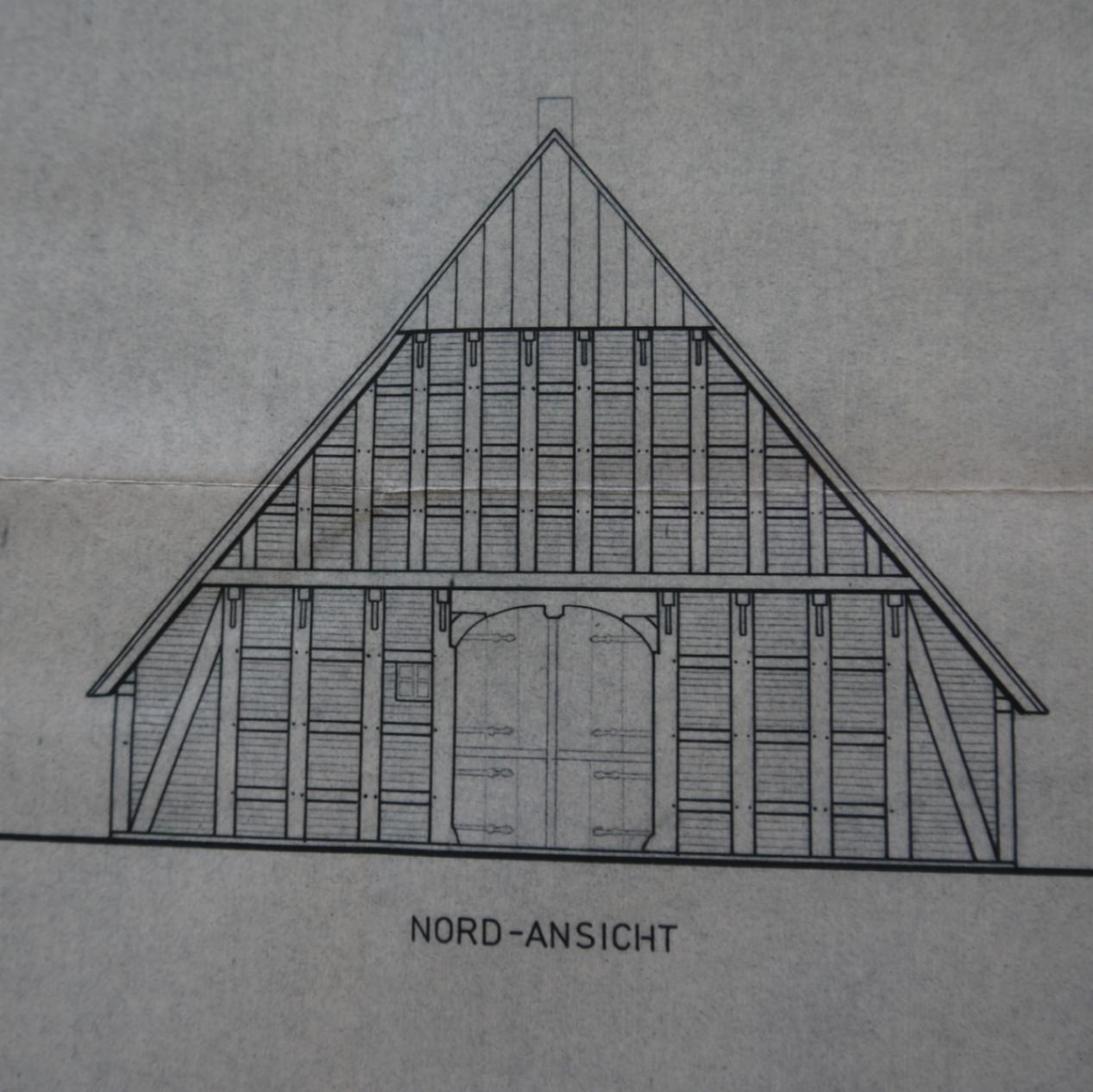
The "Meyer zu Starten House" is a so-called "Doppelheuerhaus", which originally stood in Ankum, in the district of Tütingen. It was built on 4 July 1780 and belonged to the Meyer zu Starten family. It is named after the builder Johannes Hermanus Meyer zu Starten and his wife Maria Katharina Korten, as a beam inscription on the gable reveals. In 1975, the house was acquired by the Haselünne Heritage Society, carefully dismantled and rebuilt on the museum grounds. The inauguration ceremony took place on 30 December 1977. Not all elements of the original building have been retained - for example, two vaults are missing and the original length has been shortened. The gable, which now forms the entrance, was originally attached to the rear of the building, but was moved to the front due to its better state of preservation. Originally, the building was never used as living quarters by the owner's family, but was home to two families of hirelings. Heuerlinge were families without land ownership who worked on a farm in return for low pay and the right to live there and usually lived in simple Heuerhäuser. Impressive buildings like this one were the exception - not the rule. The building in the museum was constructed for a very practical reason: After several burglaries - including the theft of part of the coin collection - a caretaker's flat was to be created here to better protect the museum's property. The creation of a flat in the neighbouring Haus Klus had not been approved for reasons of monument preservation. The interior of the building has now been functionally remodelled.
The former caretaker's flat is currently being converted into seminar and exhibition rooms. It also houses offices, archive space and the so-called treasure chamber. The latter displays selected exhibits, including coins from the early and late Middle Ages, pewter crockery, writing utensils from the 19th century and objects relating to postal history. Another special detail: the staircase inside originally came from St Vincent's Church in Haselünne. It once led to the organ there and was installed here in the 1970s. In front of the house, a göpel was erected in 1994 - an implement that used horse power to drive machines, for example for grain processing. The photos show impressions of the original location as well as construction sketches.